
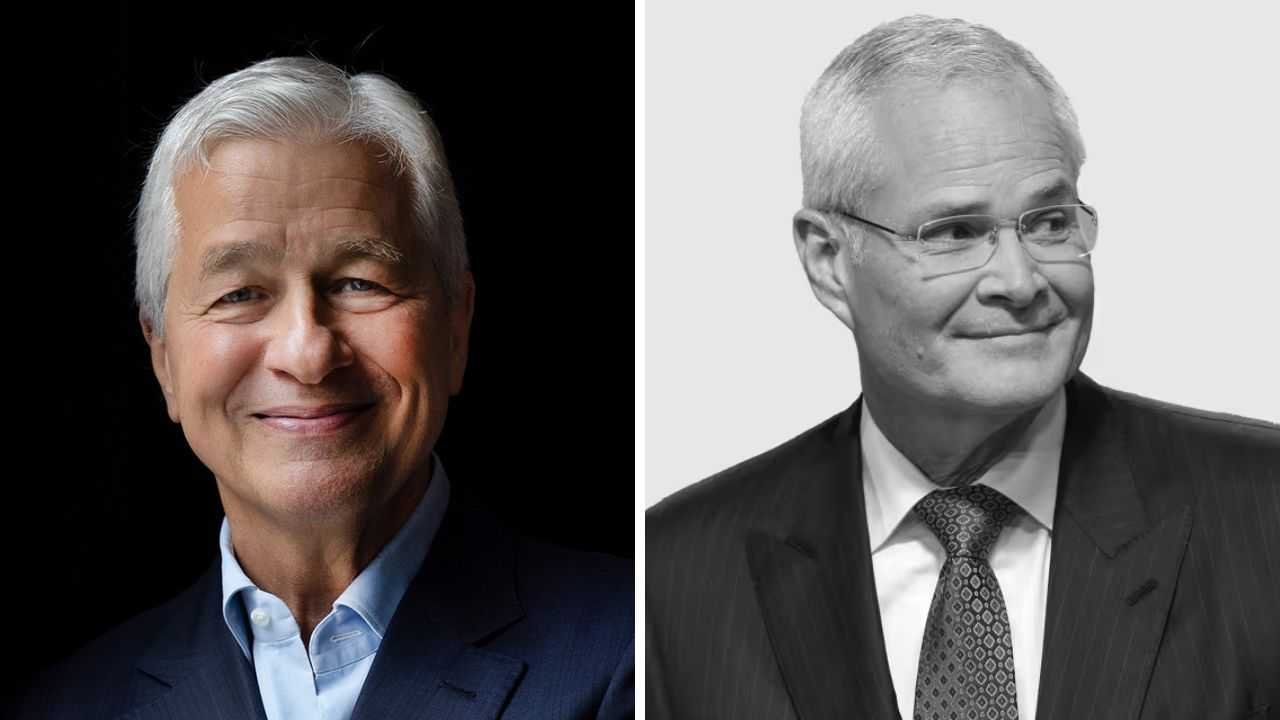
Jamie Dimon and Darren Woods are two of the most recognized chief executives in American business. Their names are associated with two very different industries, but both have built long careers around leadership, strategy, risk management, and large-scale corporate decision-making.
Jamie Dimon is the Chairman and Chief Executive Officer of JPMorgan Chase, one of the world’s largest financial institutions. Darren Woods is the Chairman and Chief Executive Officer of ExxonMobil, one of the world’s largest energy companies. Their professional paths are different, yet both executives have become influential figures in the global economy.
There is no widely documented personal or family relationship between Jamie Dimon and Darren Woods. Their connection is primarily professional and economic. Both lead major American corporations and regularly operate in areas that affect investment, employment, energy, financial markets, and long-term economic growth.
Quick Information Table
| Name | Jamie Dimon | Darren Woods |
|---|---|---|
| Profession | Banker and Business Executive | Energy Executive |
| Current Role | Chairman and CEO, JPMorgan Chase | Chairman and CEO, ExxonMobil |
| Industry | Banking and Financial Services | Energy and Petrochemicals |
| Education | Tufts University; Harvard Business School | Texas A&M University; Northwestern Kellogg |
| Major Company | JPMorgan Chase | ExxonMobil |
| Leadership Start | JPMorgan Chase CEO in 2006 | ExxonMobil CEO in 2017 |
| Known For | Banking leadership and financial strategy | Energy leadership and corporate strategy |
Who Is Jamie Dimon?
Jamie Dimon is a veteran banking executive who has spent decades in the financial services industry. He became Chief Executive Officer of JPMorgan Chase on January 1, 2006, and became Chairman of the Board one year later.
Before reaching the top position at JPMorgan Chase, Dimon developed experience across several major financial companies. He began his career at American Express before moving to Commercial Credit. He later held senior positions at Travelers and Smith Barney and eventually became President of Citigroup.
Dimon’s career also included an important setback. He was dismissed from Citigroup in 1998. Instead of ending his career, the experience became part of his professional comeback. He later joined Bank One as chairman and CEO in 2000. Bank One eventually merged with JPMorgan Chase, helping create the path to his long-term leadership at the banking giant.
JPMorgan Chase’s official biography identifies Dimon as its Chairman and CEO and notes his educational background at Tufts University and Harvard Business School.
Who Is Darren Woods?
Darren Woods is a senior energy executive who has spent almost his entire professional career with ExxonMobil and its predecessor operations.
Woods joined Exxon Company International in 1992 as a planning analyst. Over the following decades, he held a variety of domestic and international positions across ExxonMobil’s chemical, refining, supply, and corporate operations.
His career included senior management responsibilities in several parts of the business. He became president of ExxonMobil in 2016 and took over as chairman and chief executive officer in 2017.
ExxonMobil’s current corporate information identifies Woods as its Executive Chair and CEO and states that he has more than three decades of global industry experience.
Woods earned a bachelor’s degree in electrical engineering from Texas A&M University and an MBA from Northwestern University’s Kellogg School of Management.
Jamie Dimon and Darren Woods: What Connects Them?
The strongest connection between Jamie Dimon and Darren Woods is their position at the center of major American corporations.
Dimon leads a financial institution that provides banking, investment, commercial banking, transaction processing, and asset-management services. Woods leads an energy company involved in oil, natural gas, petrochemicals, refining, and newer areas of energy development.
Their industries are different, but they frequently intersect in the wider economy.
Energy companies need financial markets, investment capital, banking services, and access to global financing. Financial institutions, meanwhile, are exposed to energy prices, corporate investment, commodity markets, inflation, and economic growth.
This makes leaders such as Dimon and Woods important participants in broader discussions about the American and global economy.
Two Different Leadership Paths
Jamie Dimon’s career is largely defined by finance, acquisitions, banking strategy, and financial risk.
Darren Woods followed a more industry-specific route. His career developed through ExxonMobil’s operational and international businesses before he reached the company’s highest leadership position.
This difference is important when comparing the two executives.
Dimon built experience across several financial organizations before leading JPMorgan Chase. Woods spent most of his professional life within ExxonMobil, gaining detailed knowledge of the energy business before becoming CEO.
Both paths demonstrate that there is no single route to the top of a global corporation.
Jamie Dimon’s Leadership at JPMorgan Chase
Dimon has become one of the most prominent voices in the banking industry. His long tenure at JPMorgan Chase has made him a recognizable figure among investors, business leaders, and policymakers.
In 2026, Dimon has continued to speak publicly about economic policy and the business environment. Recent reporting showed him engaging with UK officials over proposed changes to taxation affecting banks. He argued that higher taxes could influence investment and employment decisions.
These public interventions demonstrate how his role extends beyond managing a bank. Because JPMorgan Chase is such a large financial institution, Dimon’s comments can attract attention from governments, investors, and business communities.
Darren Woods and the Future of Energy
Darren Woods faces a different set of challenges.
ExxonMobil operates in an industry influenced by energy demand, commodity prices, geopolitics, technology, environmental policy, and long-term investment decisions.
Under Woods, the company has continued to focus on its traditional energy operations while also developing businesses connected to lower-carbon technologies. ExxonMobil’s board biography specifically highlights Woods’ role in transformational change, including the launch of the company’s Low Carbon Solutions business.
This creates a difficult leadership balance. ExxonMobil must continue serving current global energy demand while also preparing for changes in the energy system.
Jamie Dimon and Darren Woods in 2026
As of 2026, both executives remain important figures in their respective industries.
Dimon’s current position at JPMorgan Chase places him at the center of global finance. Recent developments have again shown his willingness to comment on economic policy, taxation, investment, and the competitiveness of major financial centers.
Woods remains at the top of ExxonMobil after decades with the company. ExxonMobil’s current leadership information lists him as Executive Chair and CEO and describes his extensive experience across the company’s international operations.
Their continued leadership also makes the keyword “Jamie Dimon and Darren Woods” relevant from a business perspective. The two men represent different sides of the corporate economy: finance and energy.
Are Jamie Dimon and Darren Woods Business Partners?
There is no reliable evidence that Jamie Dimon and Darren Woods are personal business partners.
The two executives lead separate corporations with different primary operations. Jamie Dimon leads JPMorgan Chase, while Darren Woods leads ExxonMobil.
However, their companies operate within the same interconnected global economy. Large energy companies require sophisticated financial services, while major banks finance and interact with businesses across the energy sector.
Therefore, their connection should be understood as an industry and economic connection, rather than a confirmed personal partnership.
How Their Leadership Styles Differ
Dimon’s leadership is strongly associated with financial discipline, long-term strategy, acquisitions, risk management, and institutional scale.
Woods’ leadership is closely connected with operational expertise, energy markets, capital-intensive projects, technology, and long-term resource planning.
The difference reflects the nature of their companies.
A global bank must manage financial risk, credit, markets, regulation, and millions of customer relationships. A global energy company must manage enormous industrial operations, commodity cycles, capital projects, safety, technology, and changing energy policies.
Despite these differences, both positions require careful decision-making and a long-term view.
Why Jamie Dimon and Darren Woods Matter
Jamie Dimon and Darren Woods matter because the companies they lead have effects far beyond their own organizations.
JPMorgan Chase plays a major role in global finance and provides services to businesses, consumers, governments, and investors.
ExxonMobil plays a major role in the energy industry and operates across a complex international supply chain.
As a result, decisions made by Dimon and Woods can influence corporate investment, employment, financial markets, energy development, and broader economic discussions.
Frequently Asked Questions
Are Jamie Dimon and Darren Woods related?
There is no reliable public evidence that Jamie Dimon and Darren Woods are related. Their connection is primarily through their leadership of major American corporations.
What companies do Jamie Dimon and Darren Woods lead?
Jamie Dimon is Chairman and CEO of JPMorgan Chase. Darren Woods is Executive Chair and CEO of ExxonMobil.
Are Jamie Dimon and Darren Woods in the same industry?
No. Dimon leads a financial-services company, while Woods leads an energy company.
When did Jamie Dimon become JPMorgan Chase CEO?
Jamie Dimon became CEO of JPMorgan Chase on January 1, 2006. He became Chairman of the Board in 2007.
When did Darren Woods become ExxonMobil CEO?
Darren Woods became President of ExxonMobil in 2016 and became Chairman and CEO in 2017.
Conclusion
Jamie Dimon and Darren Woods represent two different but highly influential areas of American business. Dimon has built his reputation through decades in banking and financial services, while Woods has spent more than 30 years developing his career within ExxonMobil and the global energy industry.
Although there is no established personal relationship between the two executives, their professional worlds are closely connected through the wider economy. Finance supports investment across industries, while energy remains a major factor in economic growth and corporate planning.
In 2026, both Jamie Dimon and Darren Woods continue to hold powerful leadership positions. Their careers offer two different examples of how executives can rise to the top of enormous global organizations while managing complex challenges in finance and energy.
Read More: Meryl Streep and Darren Woods: Two Remarkable Careers in Film and Business

Hi, I’m Alex Morgan, a passionate writer at The Quick Magazine. I cover biographies, business, lifestyle, news, and trending stories, with a focus on creating clear, engaging, and well-researched content for readers.
